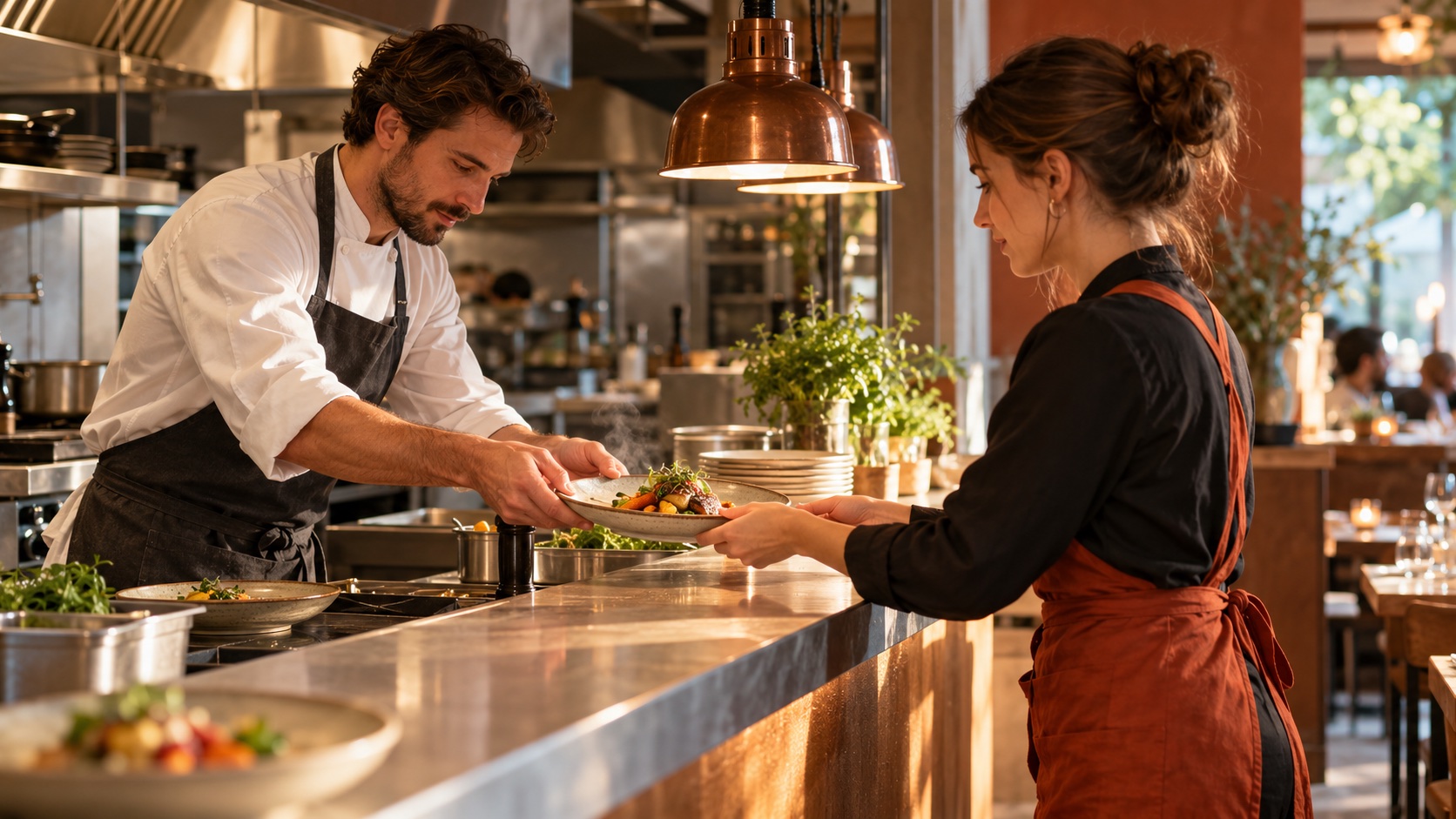
The last guests have left. The team is tidying the dining room, someone is still looking for a receipt, and tomorrow's opening crew does not know that a dish needs to come off the menu. The first problem of the next shift may already be taking shape.
A restaurant closing checklist should help you finish the service and pass on anything still outstanding. This one covers orders, payments and the handover. Use it alongside your separate procedures for cleaning, food storage, safety and securing the building.
Start with tables that are still open
Before producing the end-of-day report, look through tables and orders that are still open. Find a clear explanation for each one: a payment still pending, the wrong table number, a test order or an unfinished correction.
Do not close a table simply to clear the screen. Check any unconfirmed payment. If an order was cancelled or offered on the house, have an authorised person record the right reason.
Also check orders taken on paper during an outage. When the system comes back, an order that was already paid must not be entered again as a new sale.
Compare payments by method
Gather the records you need for cash, cards, refunds and any other payment methods you accept. Make sure you are comparing figures for the same service and reporting period.
For cash, start with the opening float, add cash received and any other recorded additions, then subtract documented removals. Compare the expected amount with the physical count using your cash-handling procedure.
Simplified example: an opening float of €100, €260 in cash payments and a documented €20 removal leave €340 expected in the drawer. A count of €330 leaves a €10 difference to investigate. This example assumes there were no other cash movements.
Count again, then look for a missed movement or a payment recorded under the wrong method. A difference on its own does not tell you what went wrong. Keep a record of it instead of changing a sale to make the numbers match.
Write an exception note someone can act on
“Card problem last night” gives the opening team very little to work with. A useful note says what is confirmed, what remains uncertain and who will check it.
For example: “Table 8, 9:10 p.m.: payment result not confirmed in the till. Manager to check terminal history before anyone retries the payment.” Use an internal reference; the handover note does not need the guest's card details.
Give each unresolved item an owner and a time to pick it up. Otherwise, a problem can travel from one notebook to the next for days.
Leave the kitchen and floor with the same information
Before leaving, flag unavailable products, prep that needs attention and equipment that caused trouble. The floor team needs to know what it can offer at the next service. The kitchen needs to know which changes have already been communicated.
“No lemon tart left; confirm availability before opening” is more useful than “check desserts.” If your menu is digital, name the person who will update availability and the person who will check it.
For regular counts and quantity differences, use the restaurant inventory routine. At closing time, pass on the exceptions that matter without copying out the entire inventory.
Keep the handover in one place
Adapt this short template to your team:
- Service: date, team and person responsible for closing.
- Tables and orders: closed, or outstanding points clearly listed.
- Payments: checked by method, with differences documented.
- Closing report: completed and kept according to your procedure.
- Next service: unavailable dishes, equipment checks and unusual bookings.
- Open actions: one person and a time to follow up for each item.
The closing report should match the transactions recorded. Before finalising it, check missing receipts and uncertain payments according to your procedure. Keep useful notes with the references needed to find those transactions again.
Bring the checklist into the next briefing
At opening, revisit anything that needed an answer. Mark resolved items and tell the team what will actually change during service. Linking the handover to the floor and kitchen briefing helps keep it from becoming a document nobody reads.
Start by choosing one place for the handover and try it over the next few services. Remove boxes that serve no purpose; add the checks whose absence caused a real problem. To discuss where order tracking and end-of-day reports fit into your setup, talk to the RiseResto team.
Ready to simplify your restaurant?
RiseResto is in open beta — onboard your restaurant today.
Get started free →